A contractor's auto program is three layers, and gaps usually appear between them.
Crew Trucks, Pickups and Job-Site Vehicles
Pickups, crew cabs and service trucks carry liability, physical damage and, when they are modified, the value of a service body or rack that has to be declared. Liability is normally written at a $1,000,000 combined single limit because that is what Tampa Bay general contractors and property managers request.
Florida's baseline sits underneath every registered vehicle at $10,000 in personal injury protection and $10,000 in property damage liability (ss. 627.736, 324.022, Fla. Stat.), which is nowhere near contract requirements. Details on the trucks themselves are on our commercial pickup truck insurance page.
Trailers, Tools and Equipment
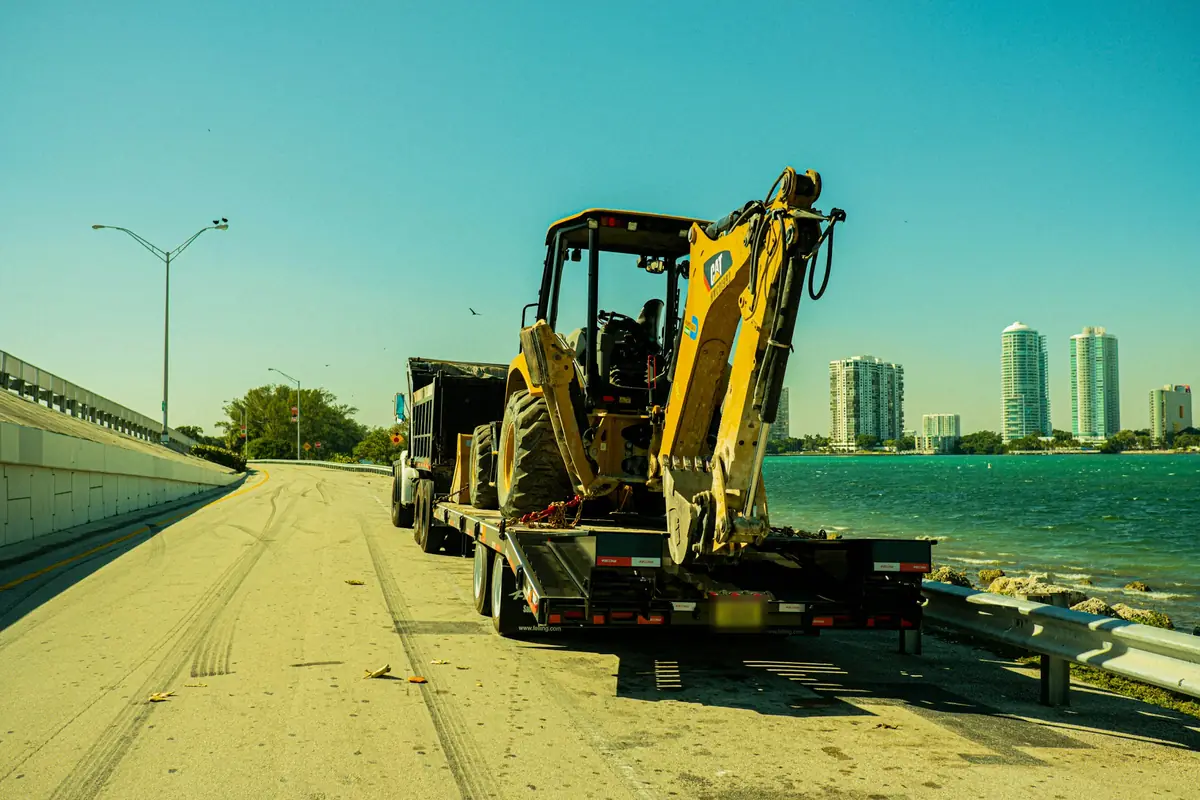
Liability generally extends to a trailer in tow. Physical damage on that trailer does not, and the skid steer, compressor or mower riding on it needs inland marine coverage. Contractors lose more money to trailer and tool theft than to collisions in an average year, and it is the most common coverage gap we find on Tampa Bay accounts. See trailer and equipment insurance.
Weight matters once trailers get heavy. A loaded combination can pass 10,001 pounds, the federal commercial motor vehicle threshold for interstate use (49 C.F.R. § 390.5T), and Florida treats any vehicle with three or more axles as a commercial motor vehicle regardless of weight (s. 320.01(25), Fla. Stat.).
Crews Driving Their Own Trucks
Two crew members following the company truck in personal pickups are a non-owned auto exposure the moment they carry tools or drive between sites. Hired and non-owned coverage protects the business when their personal limits run out, and it also covers rented equipment trucks during a push. Our commercial auto liability insurance page explains how the limits fit together.